Sunday, 1 July 2012

Barden Mill - Salt Glaze Ceramics for Ecosal

Errington Reay have been making salt glaze pots at Bardon Mill, near Hexham on the A69 since 1878.
Today at Bardon Mill, they are proud of the fact that Errington Reay is the last commercial pottery in Britain licensed to produce salt glaze pottery.
They still practice traditional ways of hand throwing, hand moulding and casting. They grind and mix their own clay and together with specialised salt glazing and firing techniques produce a truly unique textured finish.

Like with the Solway Ceramics Centre, we visited the pottery to see if they would consider participating as a cultural element in the Ecosal Route of Traditional Salt Making. As we have travelled around the west coast of the UK we also visit garden centres and find Errington Reay salt glaze pots for sale all over the country. We think that their pots should feature in the Ecosal route because not only do they produce a fantastic range of pots, but also because they still use traditional processes to make them in their historic mill site.

Karl Jacques shown us around and was really enthusiastic about the company history, the site and the potters who continue the traditional skills.

If you have a choice in a garden centre between these UK made pots or a cheaper import, support our local producers and buy Errington Reay salt glaze pots. They also come with a 10 year guarantee!

Throwing pots from an extruded cylinder of clay.
The Errington Reay stamp before firing and glazing.
Huge range of Errington-Reay pots at the Bardon Mill potery, near Hexham, Northumberland.
The salt kiln.
Karl Jacques.

Solway Ceramics - salt glazing for Ecosal

Ray and Coralin Pearson run the Solway Ceramics Centre. We visited them to introduce them to the Ecosal project to suggest that they might feature as a cultural attraction within the proposed Solway Coast section of the Route of Traditional Salt Making. They were fascinated by the concept and eagerly asked how they might make their own salt from sea water drawn from the Solway, which laps at the fields close to their pottery.
It is possible that we might join them in September to give them a demonstration using ceraaic and metal salt pans. Ray uses wood to fire his salt glaze kilns, has local clay from which he can throw his pots - so he is looking forward to having his own home-made sea salt. Dates to be arranged.

Courtyard setting in front of the tuition and lecture room at Solway Ceramics. 

Ray Pearson in front of his large salt glazing kiln currently being refurbished.

Saturday, 30 June 2012

Salt Making Demo at Saltfleetby, Lincs


Our next salt making demonstration is at the Prussian Queen, Saltfleetby, Lincolnshire.

Thursday, 14 June 2012

A Salt Refinery at The Dungeon, Hale, Merseyside

A survey of The Dungeon was carried out by the Merseyside Industrial Archaeology Society

Halton Borough Council are looking at how the site and the surrounding area might be improved as part of perimeter changes around the adjacent John Lennon Airport.

The Dungeon is a rare and important site where rock salt was used to strengthen sea water prior to making white salt. If it surrounding scan be improved it would form an important local recreational site and protect both the industrial and natural heritage. Iain Dignall of Halton Borough Council made an enquiry to us and was delighted to be put in touch with Roy Forshaw and find out that so much information was actually known about the site.

It is probably the best surviving refinery site around, mainly because it didn't become destroyed by later harbour installations. An ideal site for inclusion in the ECOSAL Salt Route, especially if it can benefit from landscape improvements, better access and information panels.

Dungeon Lane forms the boundary between Halton Borough and Liverpool.
Sir Paul McCartney walked down this lane to The Mersey were he would walk and cycle to Hale Lighthouse.
Views across The Mersey towards Frodsham and Helsby, Cheshire.
The cistern for dissolving the rock salt is now covered with a grass mound.
Cheshire rock salt was brought here to strengthen seawater before it was evaporated to make white salt.

Remains of the dock wall where the rock salt was landed.

The bay leading around to Hale Lighthouse

Start of George Street Chapel Project

The start-up meetings for the conservation and adaptive re-use of the former Independent Methodist Chapel at George Street Oldham has now started. We are acting as heritage advisors to Age UK Oldham and are appointed to sit on the Project Management Team.
Two team meetings have now been held this week.
The first to gather together the FOGS - Friends of George Street who have already been working with AUKO's Community Development manager, Maggie Hurley to research the chapel, its people and he environment and history surrounding it.
The second a meeting with HLF and the Design Team set up by architects to the project, Lloyd Evans Prichard, led by John Prichard.
FOGS, Age UK, TAKE 27 and Andrew.

Age UK, HLF, LEP & MORETON PARTNERSHIP 

Sunday, 20 May 2012

Museums at Night - Salt Making at Newlyn Art Gallery

Wasn't able to upload photos during the night as wi-fi didn't reach to the outside areas of the museum.
Lit the peat fire at 7.30pm on the 19th.


Leaflets available from the ECOSAL partner salt museums in Portugal, Spain and France.
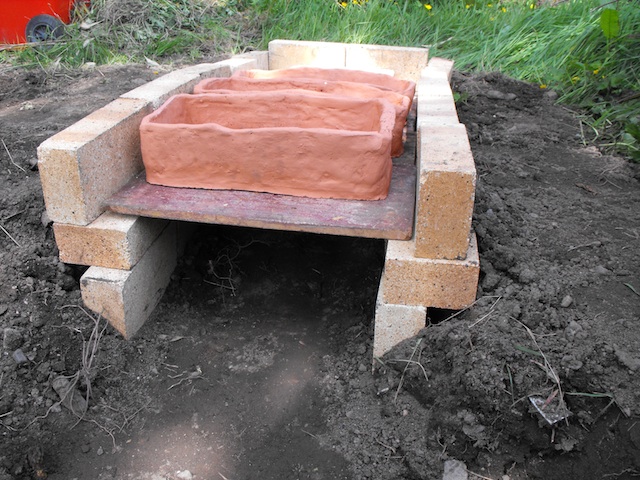
This is possibly the first time a replica of the Trebarveth salt hearths have been fired since they were used during the Roman period.
During the evening margharitas were served
Salty tales were told
and a stop-motion film was made using white salt crystals on a black board. 'Through the Gaps'
Local blog record of the event at its start and at 2am.


Stop motion film using salt crystals on a black board filmed with a video camera.
Simon Jaques,Museum Manager and Cat Gibbard, Education Officer with the salt made during the night.

Wednesday, 16 May 2012

Field Trip to Cornish Sea Salt Company

Spent today with the Cornish Sea Salt Company, visiting their sea salt works and looking at the salt making site at Trebarveth as a Lead site within the UK ECOSAL Route of Traditional Salt Making.


The modern sea salt works of the Cornish Sea Salt Company is unfortunately located on private land and is unaccessible for public visits.

The Roman salt making site at Trebarveth, St Keverne on The Lizard Peninsula is located on a coastal footpath. We walked from Coverack. It was excavated in 1969 by David Peacock and an excavation report is published in Cornish Archaeology Vol.8 p47-65.

The remains of the huts and salt hearths are now being eroded by the sea.
See below. Perhaps it would be possible to insert some coastal protection measures here, as have been created at Port Eynon on The Gower, South Wales and at Crosscannonby in Cumbria, to protect this salt making site for future generations.


Also spent time preparing for our salt making demonstration of ancient salt making, using replica ceramic salt pans as might have been used at Trebarveth. Details of our part in Newlyn Art Gallery's Museums at Night event over the night of 19-20 May.


Some delays in our travelling today were caused by local preparations getting ready to receive the Olympic Torch Relay, which arrives at Lands End on the morning of 19 May with its first stop at Newlyn on the morning of our salt making demonstration. Current weather forcast is for rain!